Material and Circular Economy
Management of raw materials and recyclable materials in the construction industry
The construction industry is one of the most resource-intensive sectors worldwide. The linear economic system – comprising raw material extraction, use and disposal – is increasingly reaching its limits, as raw materials are available only in limited quantities. These challenges affect both our own activities and the upstream and downstream supply chain. To conserve recyclable materials and reduce waste, it is urgently necessary to transform the construction sector into a circular economy. This involves maximising the life cycle of products and materials through reuse and recycling to the highest possible standard, whilst simultaneously preventing waste. The aim is to keep raw materials within the economic cycle for as long as possible.
The circular economy is a core element of our ESG strategy
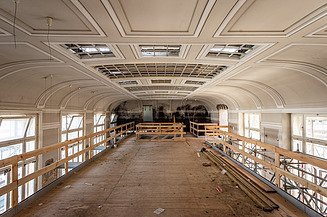
When we build, we use large quantities of non-renewable building materials such as sand, stone, asphalt and concrete. Renewable raw materials, particularly wood, currently still play a minor role in the construction industry, but are being used with increasing frequency. When a building reaches the end of its life cycle, large quantities of waste are generated. In most cases, this waste is not returned to the cycle in an equivalent form, but is often used for less demanding purposes, for example as a frost protection layer. In the worst-case scenario, it is completely removed from the economic cycle when it is thermally recycled as waste or ends up in landfill. In addition to the high volume of waste, the pollutants contained in the waste harm the environment in many ways. It is therefore important for us to promote waste prevention and the high-quality recovery of waste. It should be noted here that waste in the construction industry is highly project-dependent and that decisions on its further use or disposal are often made in consultation with clients. STRABAG bases its strategies on the 10R framework for the circular economy.
STRABAG is working to reduce environmental impacts associated with raw material consumption and waste streams, and to promote a resource-efficient circular economy. To achieve our climate targets, the responsible use of raw materials and the use of innovative, CO₂-optimised building materials play a central role.
In the area of the circular economy, we focus on the following seven areas of action. These are set out in our environmental and energy policy:
- Circular design
- Circular building materials
- Zero waste construction site
- Building in existing structures
- Reuse
- Deconstruction
- Value stream management and recovery
Position paper on circular economy
At the 2024 Alpbach Forum, a position paper on the circular economy was drawn up as part of the ‘Circular Economy in the Construction Industry’ lab. To this end, STRABAG brought together a group of 30 participants from the fields of research, industry and politics. The position paper sets out practical solutions and calls for political action on the pressing issues in the field of the circular economy within the construction sector.

Position paper on the circular economy
Projects and initiatives for the efficient use of raw materials
The circular economy offers significant opportunities for sustainable transformation in the construction sector and is being promoted as a key priority. To this end, STRABAG is pursuing a range of measures and projects that contribute to our strategic focus areas.
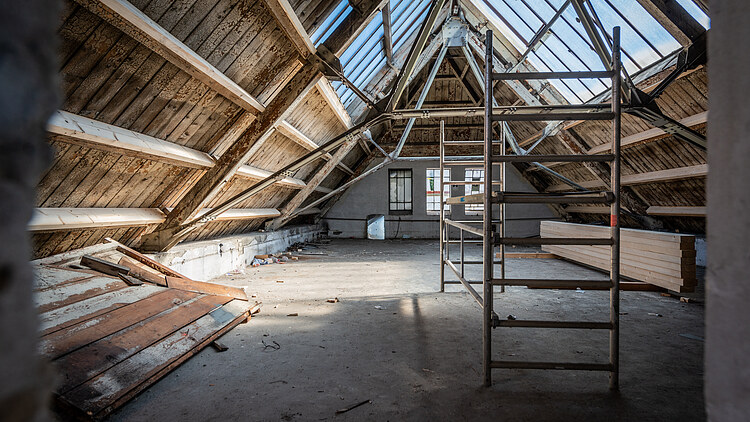
Reconstruction, conversion and refurbishment
Building in existing structures is the resource-efficient alternative to demolition and new construction, and forms a key part of a successful circular economy. This involves refurbishing or modernising existing buildings to extend their useful life and reduce emissions during operation.
In 2024, STRABAG launched the BESTAND BEYOND brand – and in 2025, the brand was expanded in a targeted manner. It offers an integrated range of services, from the assessment of existing buildings through planning, construction and demolition to the operation of existing buildings. In particular, the assessment of existing buildings and BIM models enable existing buildings to be better digitised and planning to be further developed.
Sustainable building materials
For a functioning circular economy, it is important to make the transition from the use of primary raw materials to the increased use of secondary raw materials, renewable and low-emission building materials. Alongside the existing challenges associated with the use of secondary raw materials – such as technical requirements regarding safety and pollutant limits – the use and further development of this area offer significant opportunities.
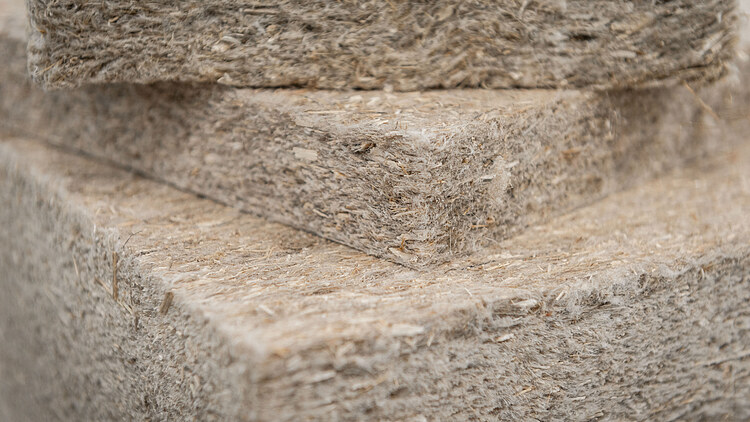
In the field of renewable raw materials, we focus on timber with Moleno (modular timber construction) and our Group’s timber construction experts, Züblin Timber, as well as on natural insulation materials such as hemp and flax straw. They can have a smaller ecological footprint than conventional mineral building materials and sequester CO2 As part of an internal Group needs analysis, other key renewable raw materials and building materials were also identified for the Group – amongst other things, the potential of straw and clay is being tested.
In addition to the potential of renewable raw materials, we are researching and piloting the use of low-emission mineral raw materials. Based on this, key focus areas – such as the application of biochar and the use of mineral waste – have been defined to drive forward research in these fields.
Value stream management
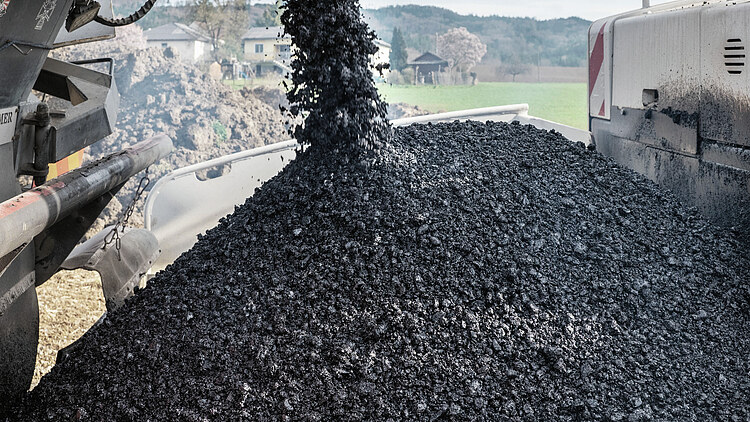
A robust data foundation is essential for analysing our value streams and ensuring they are managed in a circular manner. To this end, a standardised system for recording waste volumes was developed in 2023 and rolled out across the Group in January 2024. Another key aspect is the expansion of STRABAG’s own sites, which can be utilised for can be utilised for value stream management. This enables us to recycle more recyclable materials at our own sites and keep them in circulation within the Group.

Further projects
Click here for an insight into STRABAG’s projects related to materials and circularity
more information