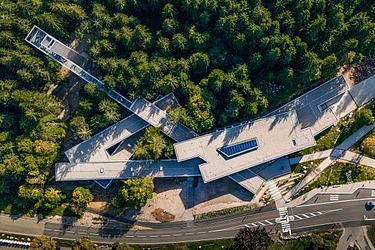
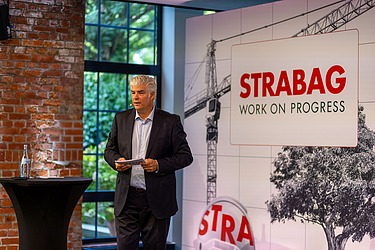
Capital Markets Day 2026
Strategy 2030
We want to be profitable and at the same time create added value for people and our environment. In keeping with this, our corporate strategy for 2030 clearly reads: People. Planet. Progress. – the guard rails that show us the way.
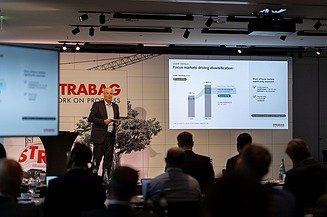
"Our Strategy 2030 is delivering results. STRABAG is larger, more broadly positioned and more resilient today than it was when the strategy was launched. At the same time, we see considerable opportunities for further growth in our markets, particularly in Germany, Central and Eastern Europe, the United Kingdom and Australia, and look ahead with confidence to the second half of the strategy period."
Stefan Kratochwill, CEO of STRABAG SE
-
Geographical diversification
Since 2022, STRABAG has further expanded its position in its core markets of Germany, Austria, and Central and Eastern Europe while significantly strengthening its international presence. In particular, the focus markets of the United Kingdom, Australia and the Americas (Canada, Chile) have developed into important additional pillars of growth.
-
Focus on growth markets
As part of its strategy, STRABAG is focusing on four structural growth markets:
- Mobility infrastructure
- Energy and water infrastructure
- High-tech facilities
- Building decarbonisation
Driven by long-term megatrends, their share of the Group’s order backlog has been rising since 2022. Further information on this is available in the STRABAG Investment Case.
-
High level of vertical integration
STRABAG’s high level of in-house value creation remains a key factor for the success of its business model. With around 90,000 employees, a large network of production sites and an extensive company-owned equipment fleet, the Group covers a large part of the value chain itself. This increases security of supply, reduces dependence on external capacity and supply chains, and contributes to resilient margins over the long term.
-
Technology leadership
STRABAG is driving the transformation of construction into a data-driven industry. By linking BIM and GIS data, the Group is laying the foundations for digital twins and the widespread use of artificial intelligence. AI applications are already being used in areas such as design, risk management and process optimisation. Generative design, for example, can produce hundreds of design variants within minutes, while AI-supported risk models use historical project data to identify potential risks at an early stage.
Our targets
As part of our Capital Markets Day, we raised our targets for 2030:
- From 2030 onwards at least a 6% EBIT margin every year
- € 30 billion output by 2030

CMD Presentation 2026
Discover the full presentation from Capital Markets Day 2026.
Find out more